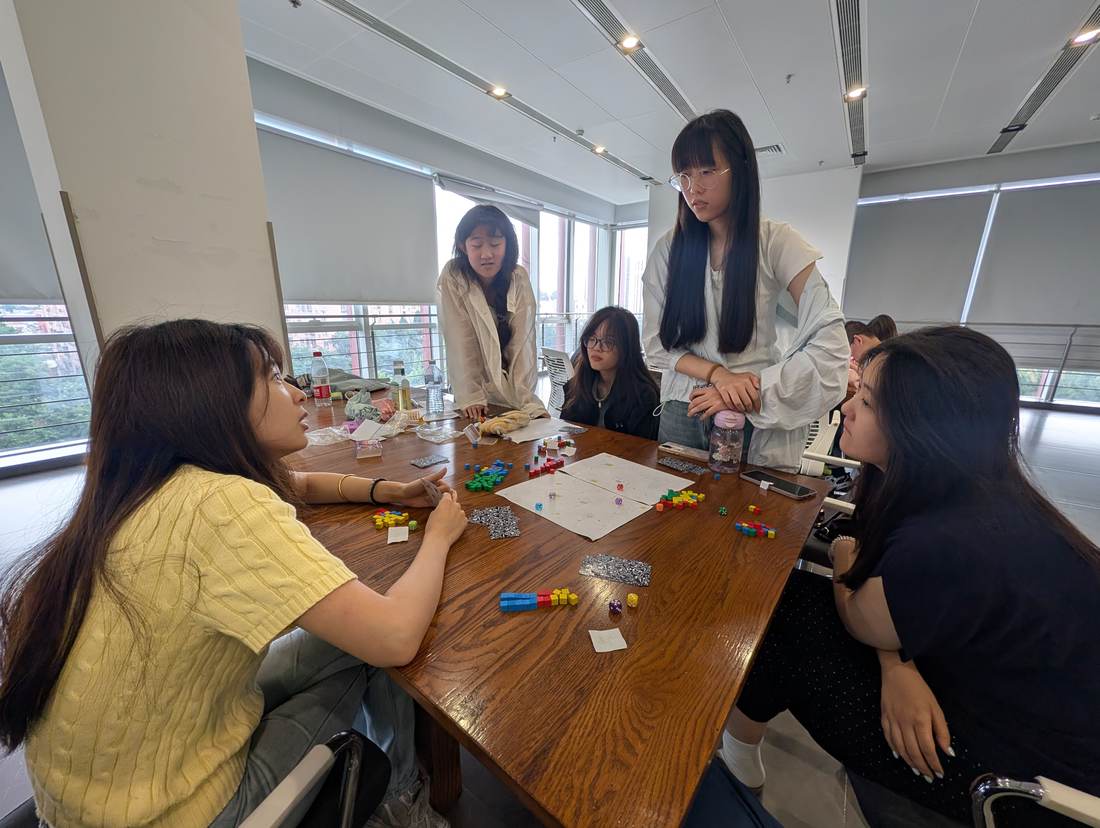
Eight to twelve students, ages 10 to 15, ninety minutes a session. I bring the instructor, the games and the materials—and I run the first session free, on site, so you can watch one happen before anything is committed.
$1,800 six sessions|$1,000 three sessions|materials included
Three steps, and you can stop after the second one.
One
Tell me your group size, the ages, and what your calendar looks like. Six sessions or three.
Two
I run the first session free, on site, while you watch. No invoice, no commitment, no obligation to continue.
Three
You decide whether to book the rest.
Kabel Kind LLC holds a current State of Hawaiʻi Certificate of Vendor Compliance, so a school or program can pay me directly. I bring the games, the materials and the instructor. There is nothing for your staff to prepare and nothing for them to run.
The Sessions
A game designer sees the world in a specific way—somebody built this, and it could have been built differently. Across the block, students take real games apart, learn what each piece does to the people playing, and design with human experience as the target.
Every design decision has real consequences.
Ninety minutes each. Play first, analyze and understand after.
Ninety minutes each. Play first, analyze and understand after. A condensed experience.
01
Play a Game, Then Break It Down
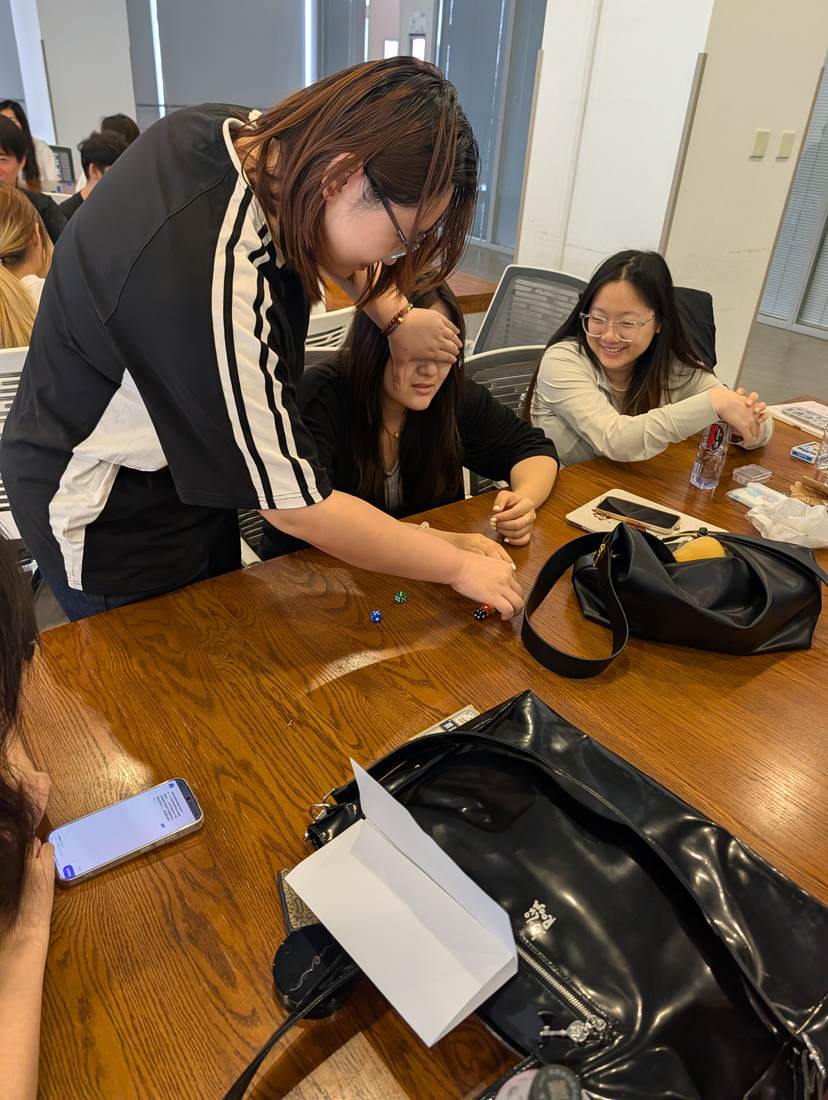
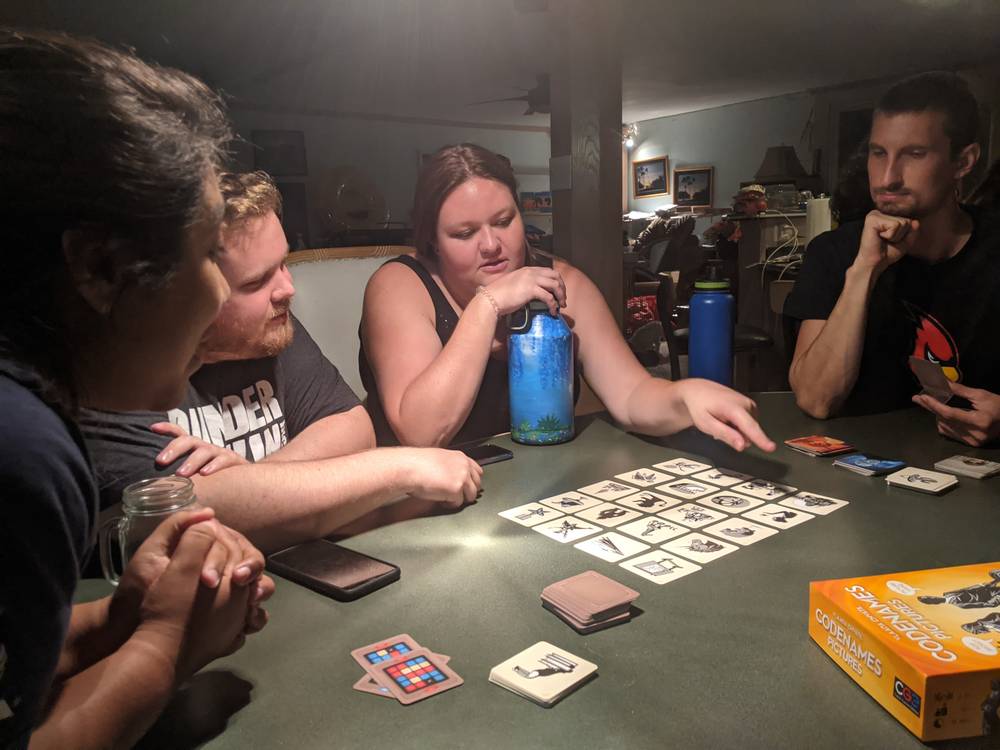
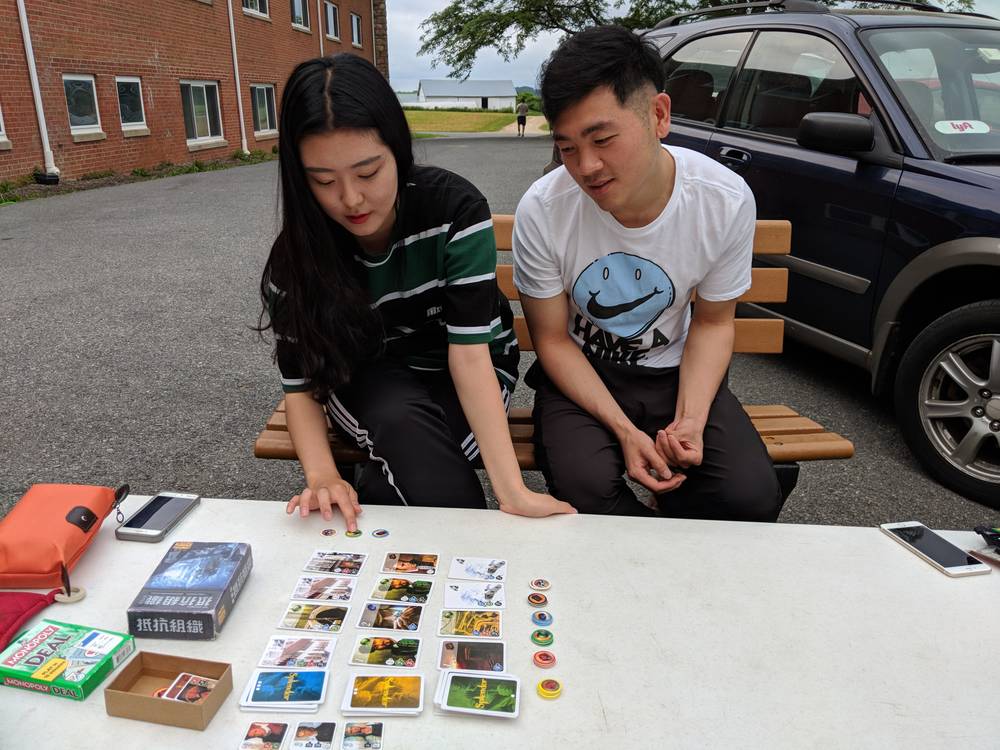
We start with play and begin to name its components: actions, goals, rules, objects, playspace, players. The games are simple, high-energy, and somewhat familiar.
Circle games · Card Games
02
Change One Rule
Students will revisit a familiar game, change one rule, predict the effect, replay the game, and write one sentence: what did that do to how it felt? It is a controlled experiment wearing a party hat. The purpose is to become sensitive to the ways games produce experiences.
Revisit our circle games
03
Build an Escape Room Puzzle
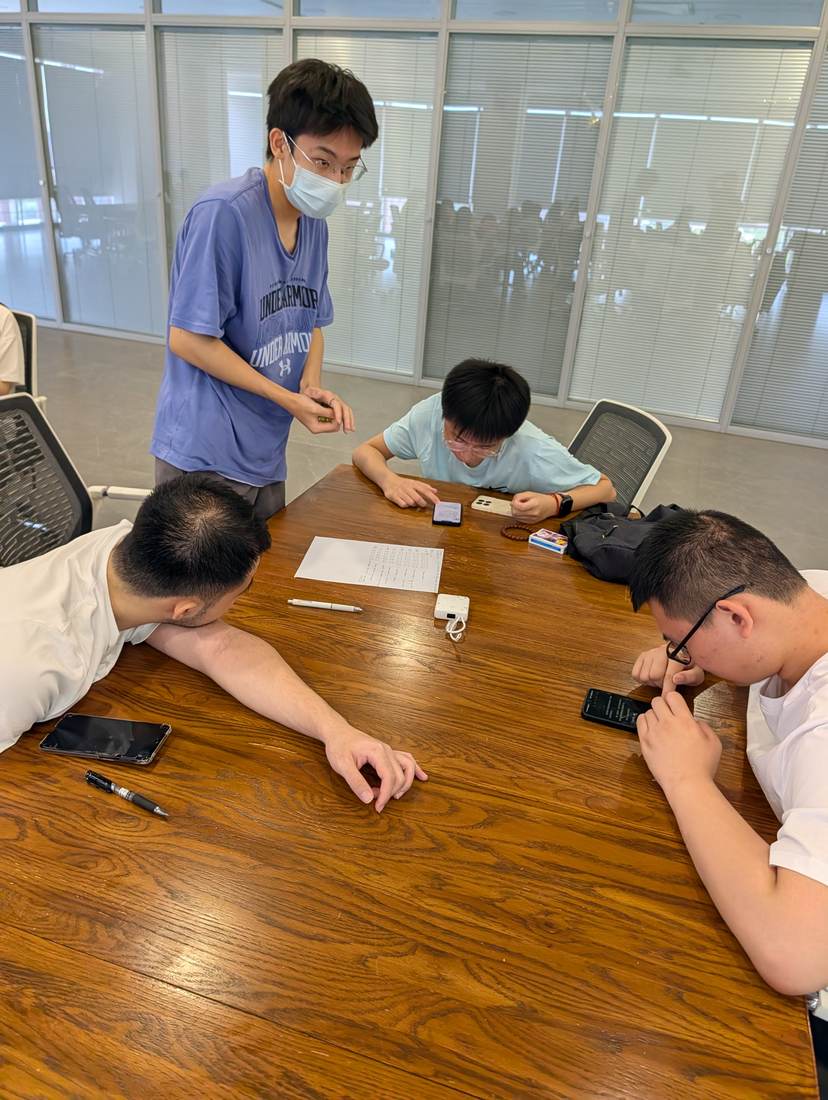
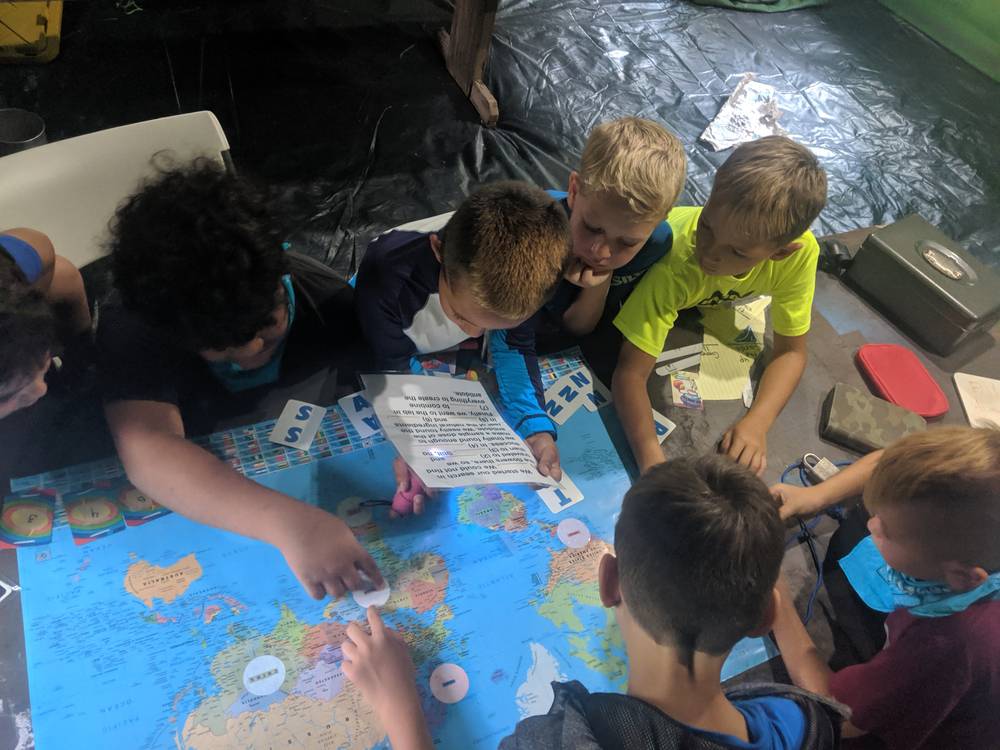
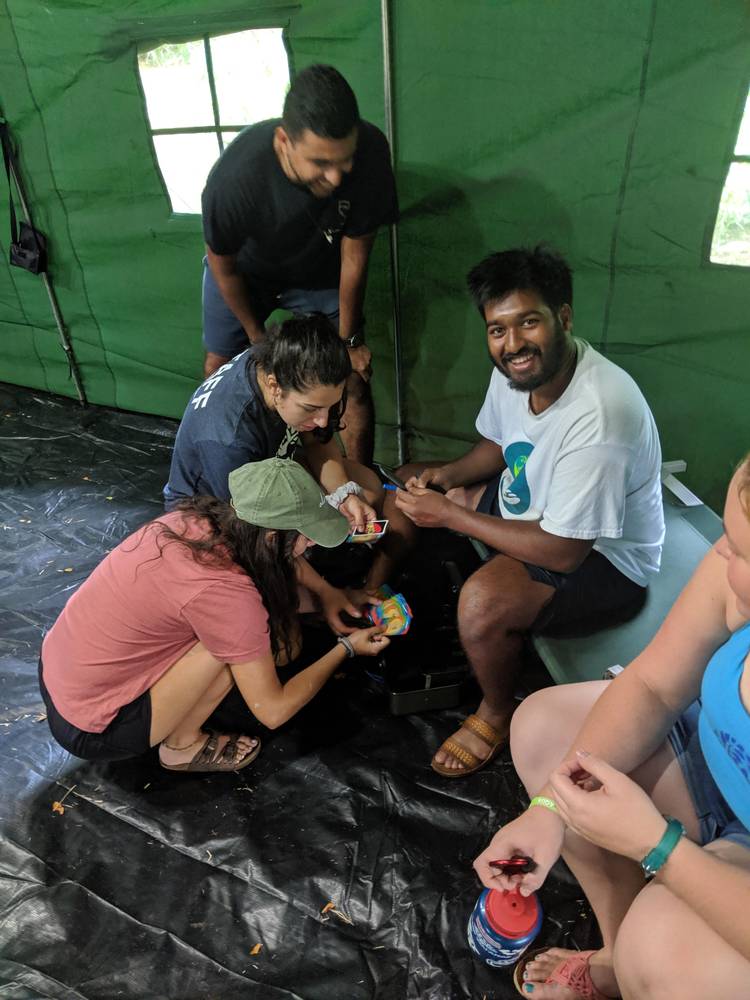
This time we focus on stuff rather than rules: we build escape room puzzles. Groups build a puzzle from a lock and a handful of unrelated objects, then watch another group attempt it—without being allowed to say a word. Watching someone miss the thing you were certain was obvious is a lesson no lecture delivers.
Locks · puzzle build · timed cold solve
04
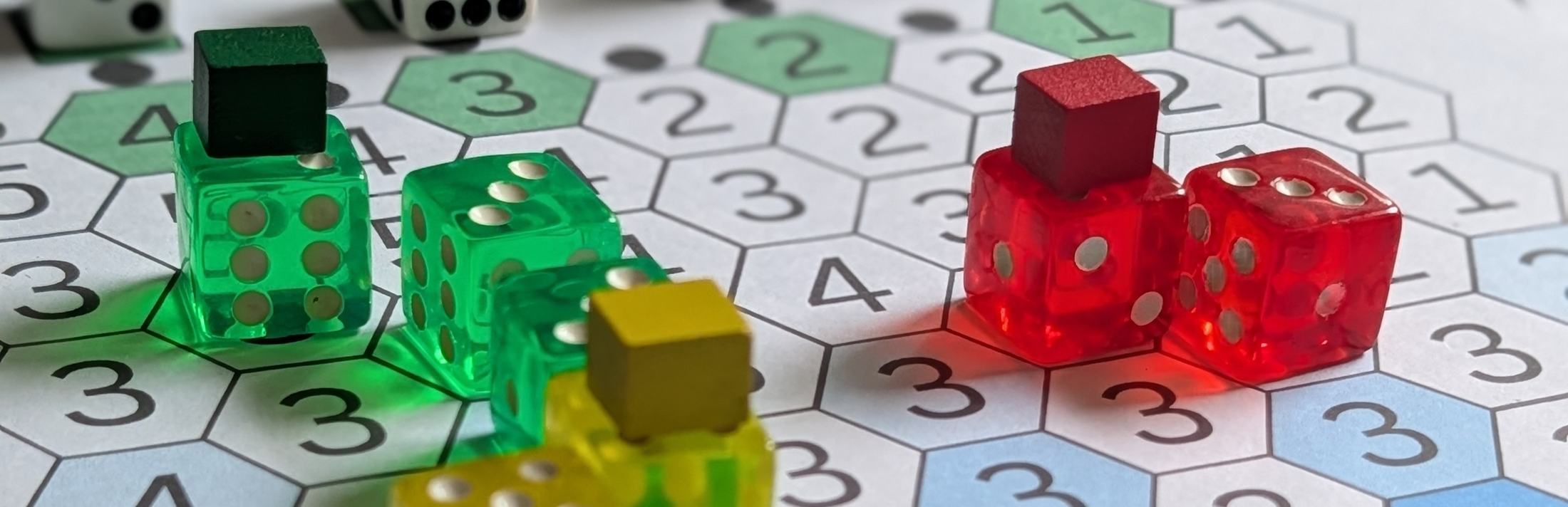
Study a Gaming Experience with Dice
Meet randomness! Students experience three simple dice games and compare the experiences. Push-your-luck mechanics, rising tension. Before playing, each group writes down how often they think a turn will go bust—then they tally what actually happens and hold the two numbers side by side. Roll again or bank? Then they build a dice game of their own with one deliberate tension knob.
Can’t Stop · Pig · predicted vs. observed
05
Design a Game: Early Stages
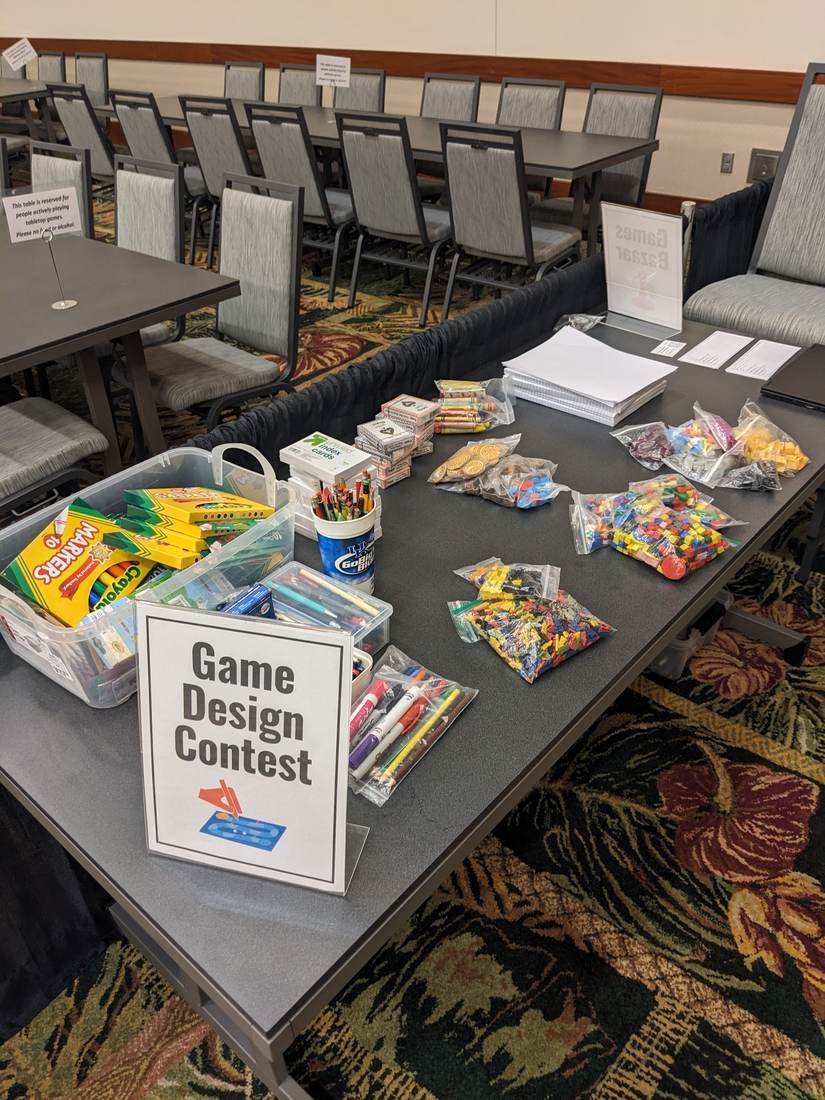
In teams, students choose an evocative theme, describe the target experience they want the player to have, then build toward it. Paper, index cards, dice, and cubes. First playtest happens the same session, because a design you have not watched someone else play is still a guess.
Prototype · first playtest
06
Playtest, Iterate, and Present
Quick cycles of design and feedback continue. Each group writes the rules to their game so another group can play it with the designer sitting there saying nothing, then revises the text wherever players got stuck. Finally each group presents: here is what we wanted players to feel, here is what happened, here is what we changed and why.
Group build · rules writing · playtest rotation · post-mortem
01
Play a Game, Change One Rule
We start with play and name its components: actions, goals, rules, objects, playspace, players. Then students revisit a game, change exactly one rule, predict the effect, replay, and write one sentence: what did that do to how it felt? A controlled experiment wearing a party hat—and the move everything after it rests on.
Circle games · card games
02
Build an Escape Room Puzzle
This time we focus on stuff rather than rules: we build escape room puzzles. Groups build a puzzle from a lock and a handful of unrelated objects, then watch another group attempt it—without being allowed to say a word. Watching someone miss the thing you were certain was obvious is a lesson no lecture delivers.
Locks · puzzle build · timed cold solve
03
Turn Your Puzzle into a Game
Same bin of objects, a harder problem. A puzzle has one solution; a game has a space of choices. Groups turn their materials into something worth playing more than once, against a test they can apply themselves: it has to be playable twice, and the second time has to go differently. Then the full loop—change one thing, predict, playtest with another group, read the result, revise. They write the rules down so the other group can play without them saying a word.
Their own build · rules writing · cross-playtest
By the last session, every student has designed a game, watched a stranger play it, and changed it twice.
What Playing Does
Nobody sits down to a game in order to grow. The learning is a by-product of wanting to win—which is exactly why it lands. These are the things that happen anyway, while everyone is busy trying to beat each other.
Attention
A well-designed game holds you right at the edge of what you can do. Students practice sustained concentration without once being asked.
Face to Face Interaction
This is time away from screens with a focus on face-to-face interaction.
Competence You Can Feel
Building something that compounds—an engine, a route, a set—meets a need that sits near the center of motivation. You get better, and you can tell that you did.
Negotiating a Shared System
Every group has to agree what a rule means and who decides when it is unclear. That argument, had well, is governance in miniature.
Leading without Authority
Teaching a game, hosting a table, encouraging players through difficult moments. The most ordinary leadership rehearsal there is—and players get many reps at it.
Losing with a Safety Net
A game is a safe place to be wrong. You test an idea, watch it fail, and try again in the same afternoon—which is the whole of design, and most of learning.
Vygotsky watched children at play and said that in it a child stands “a head taller than himself.” Designing a game rather than only playing one raises the same effect again: you stop being the person the rules happen to, and become the person who writes them.
I Have Been Doing This a While
I know what a room of twelve at three in the afternoon feels like. Three strands of experience coming together:
Teaching - Summer Camps and Schools
Curriculum and Instruction, SUNY Buffalo. Dissertation research built on interviews.
2002–2021, across eight locations in the United States and Asia. Directed camps in Michigan and Beijing, and coordinated an American Camp Association reaccreditation—the original training ground for holding a room of young people.
Teaching and tutoring at a boarding high school in Pennsylvania, including ELL students.
Four escape rooms built and run—three at Camp Waianae, one for my own business. Puzzle design with a live audience and a clock.
Approved Hawai‘i DOE substitute teacher—Moanalua High School and campuses across O‘ahu, four consecutive school years.
A university course in Game Design and Psychology at the Gengdan Institute, Beijing University of Technology.
Hosting and Organizing
First Monday Night on O‘ahu.
Monday Night, still running. Four years, unbroken.
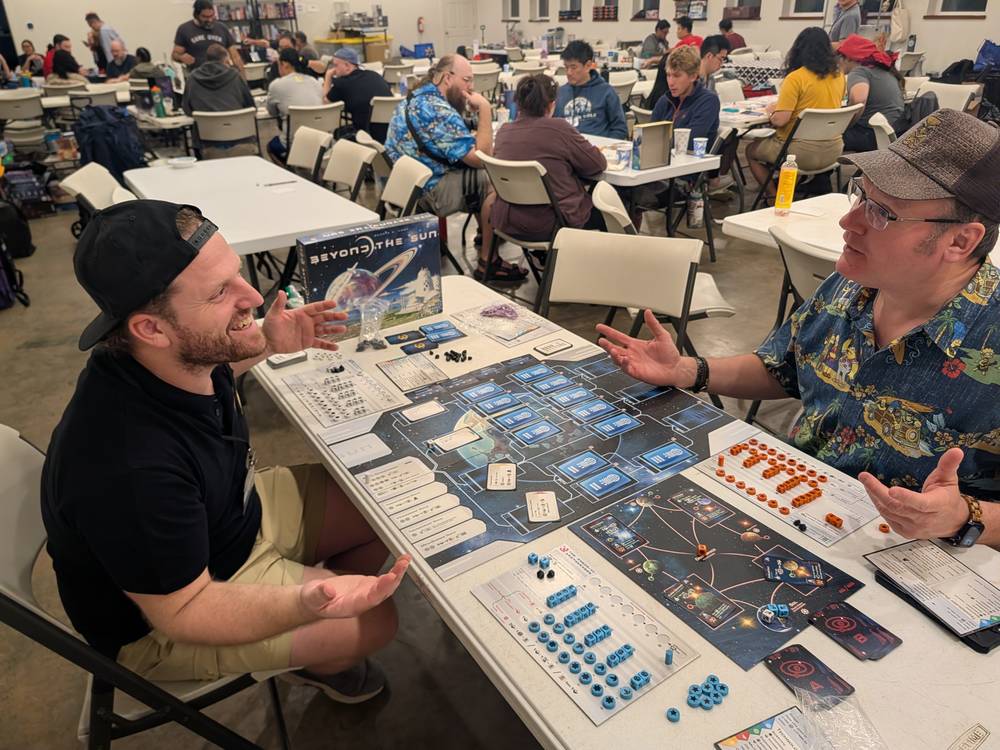
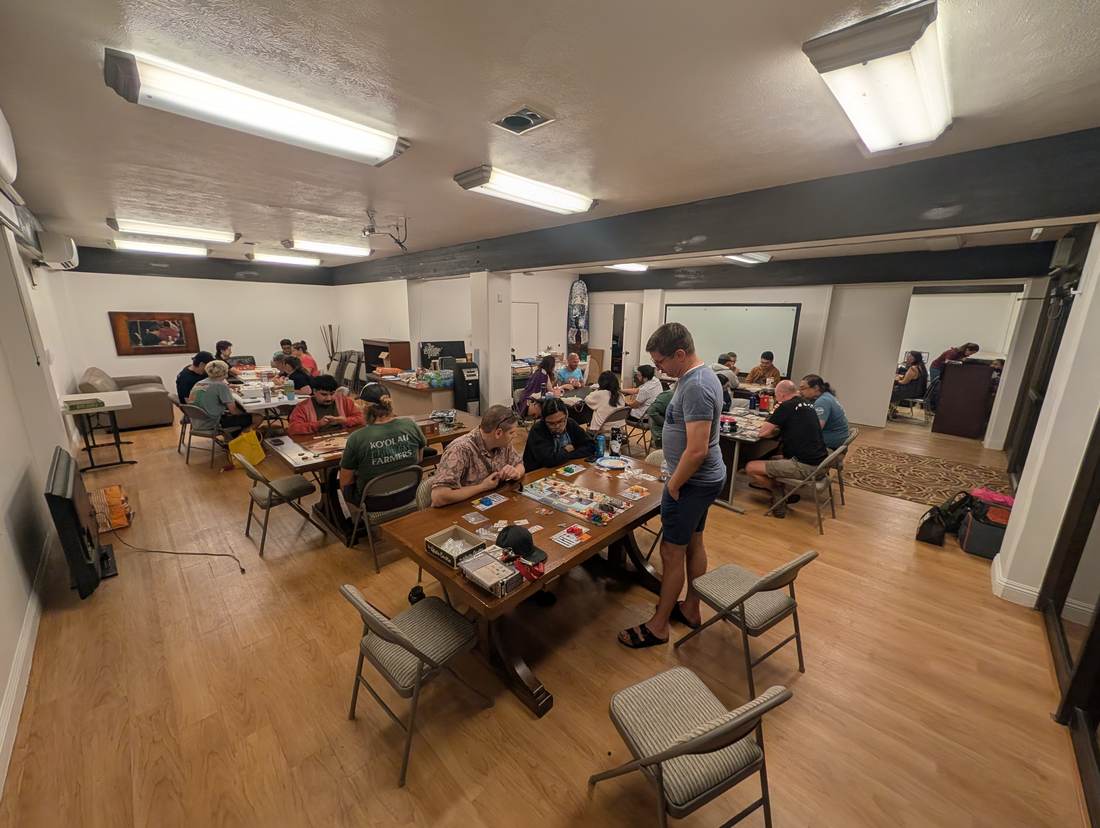
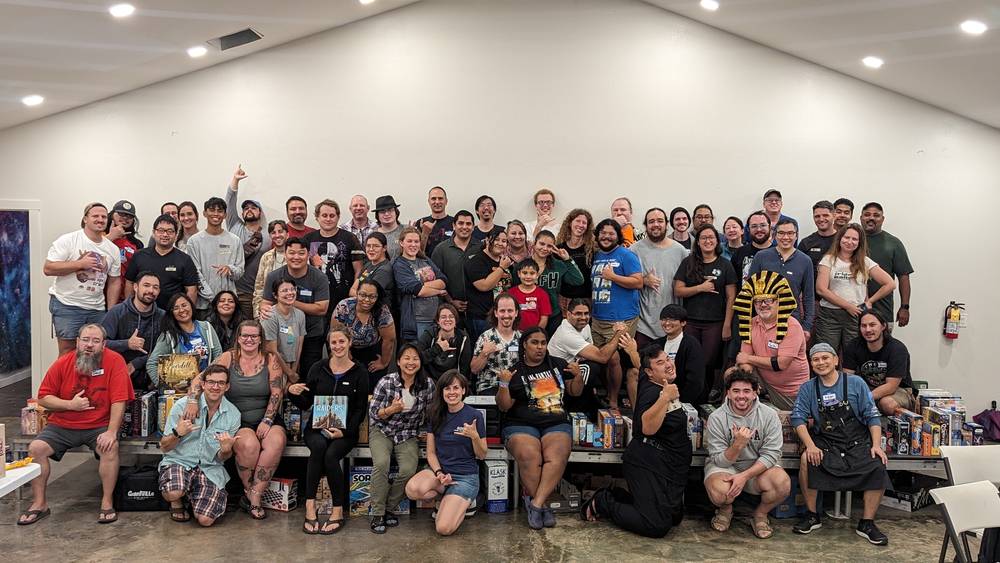
Founded the Hawai‘i Board Game Retreats at Camp Waianae. Twice a year, now drawing 70–80 attendees. The next one runs 25–27 September 2026.
Volunteered at my first convention. Began hosting game nights at churches and community centers.
Designing and Publishing
Sugar Shack, Hike O‘ahu, Solar Smugglers, Mole Hill, Party Wave and others—several playtested to completion.
Entered design contests.
Ran designer meetups.
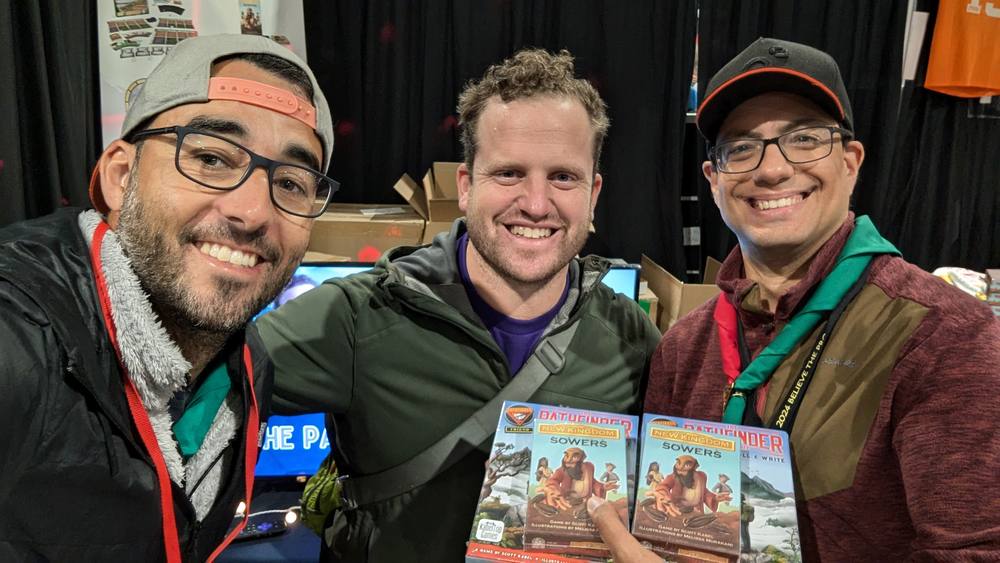
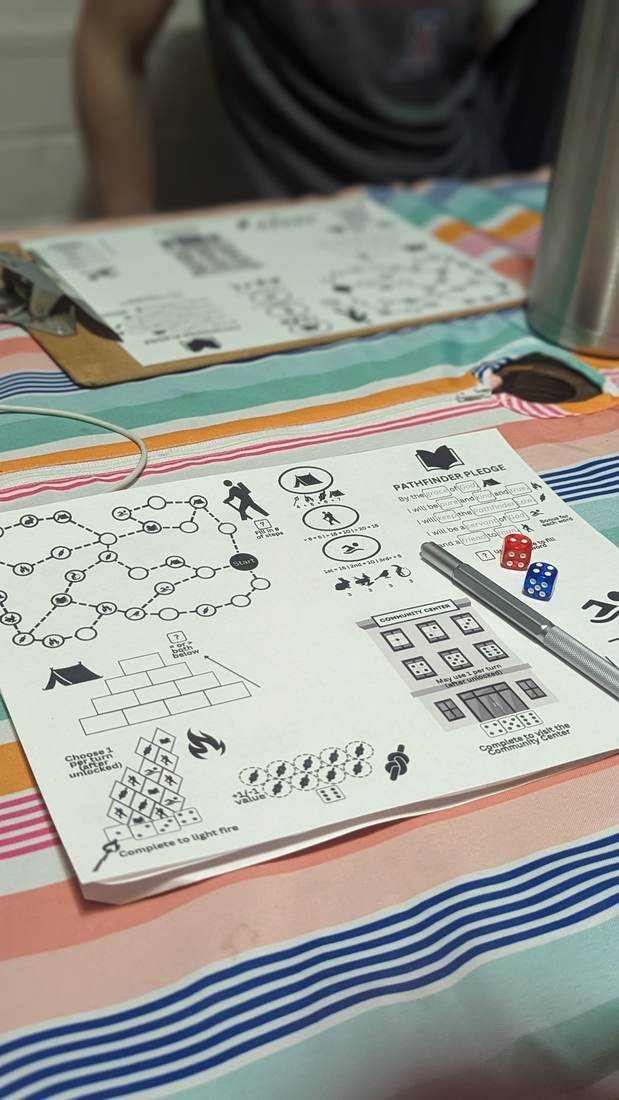
Playtesting the Pathfinder Club Game.
Printed it and sold it. Start to finish—concept, prototype, playtest, production, a table and a price.
The Pathfinder Club Game and New Kingdom Sowers both went all the way to a finished, boxed product.
Rise of Babel and 3 Magi.
A few of my own prototypes
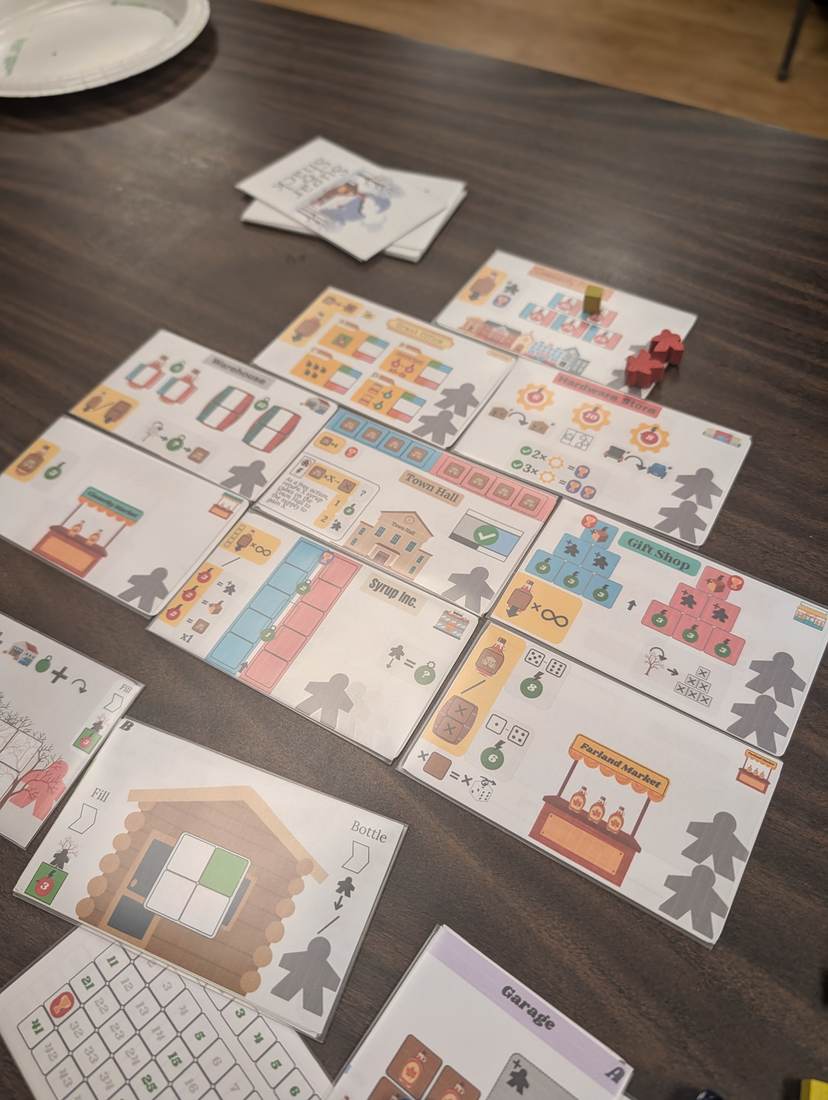
Sugar Shack
Worker movement, engine building. Maple syrup making against a rival syrup maker.
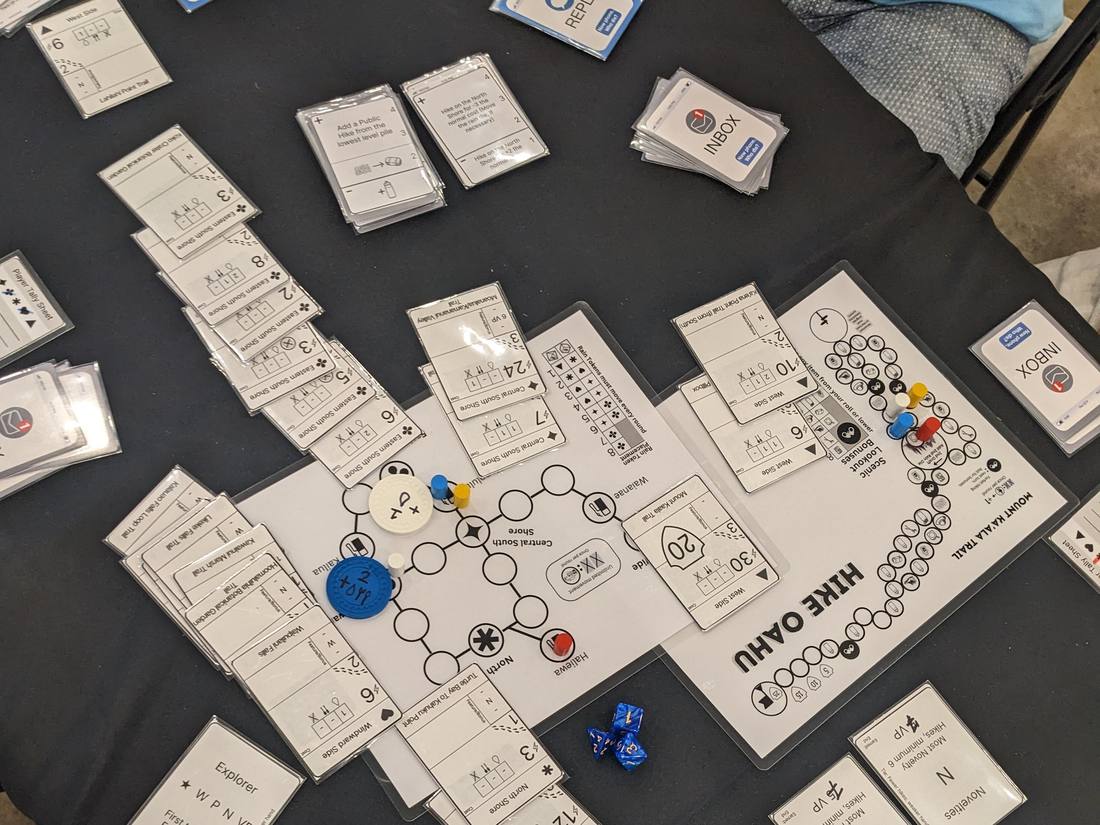
Hike O‘ahu
Set collection across five regions of real O‘ahu trails.
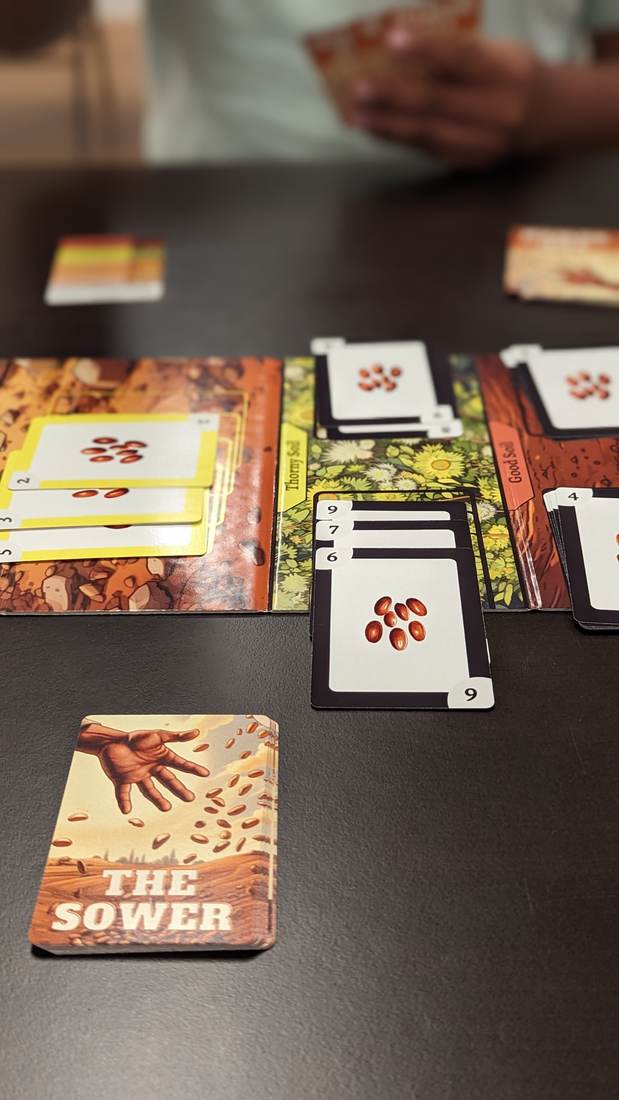
New Kingdom Sowers
An action selection race. Designed, printed, sold.
Pathfinder Club Game
A roll & write. Designed, printed, sold.
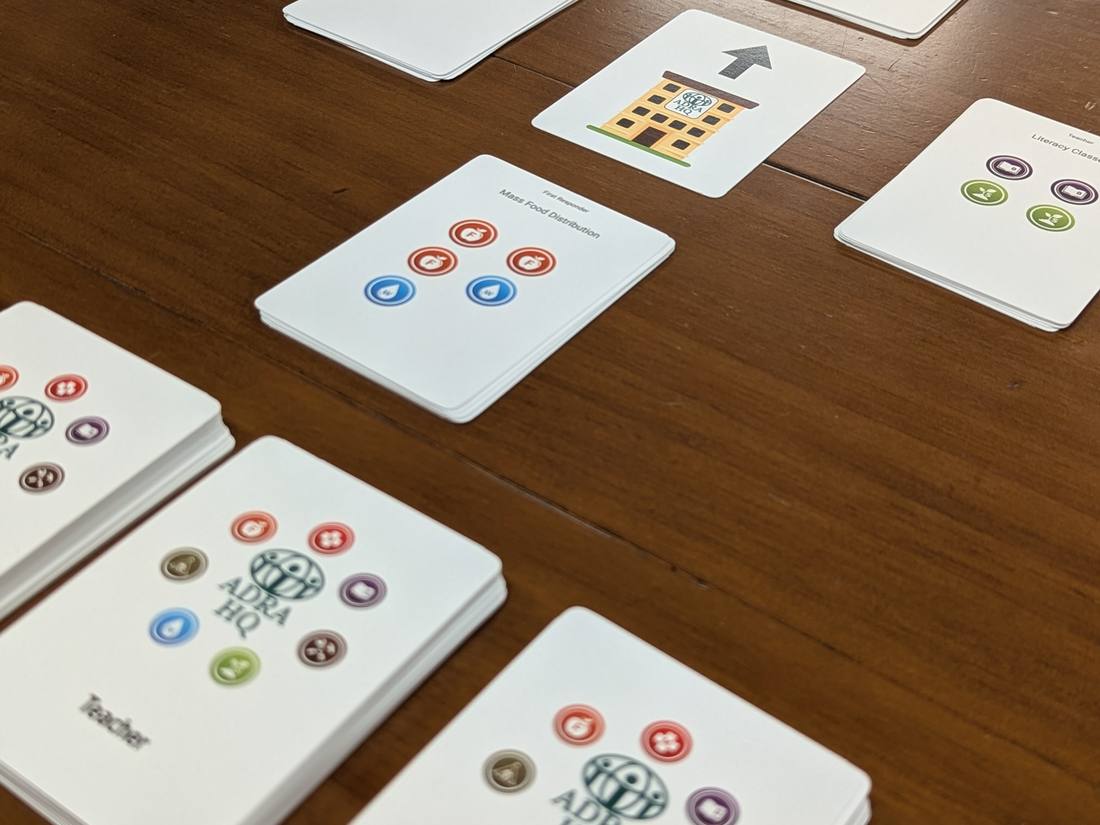
ADRA: Rapid Response
Real-time icon matching. Disaster relief logistics as a card game.
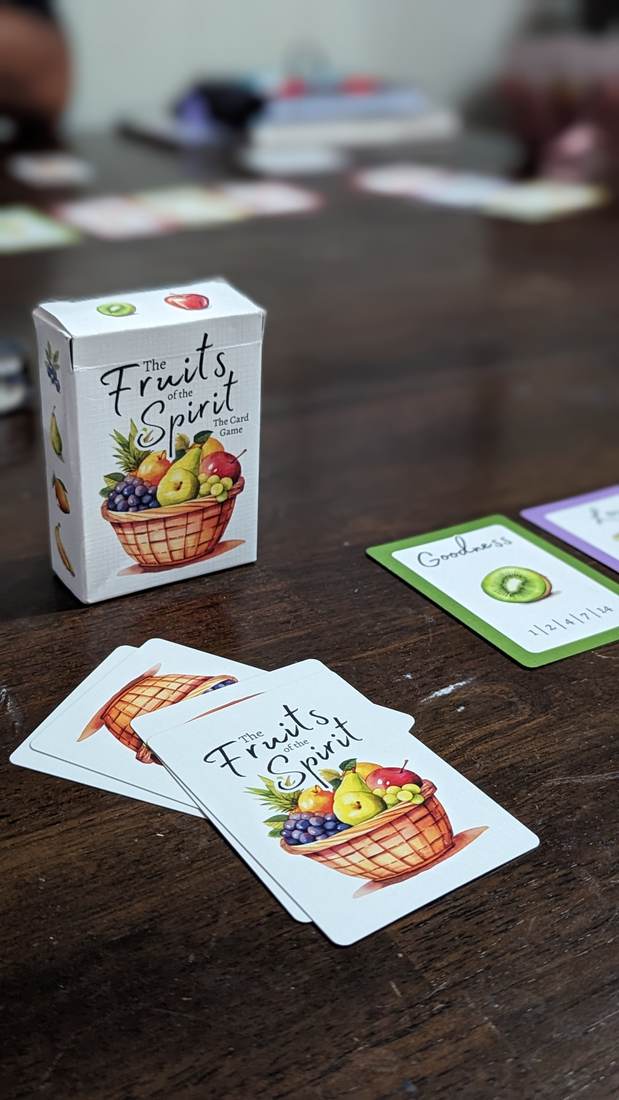
The Fruits of the Spirit
Cooperative set collection. A card game about growing something slowly.
Book a Block
Those hours get filled either way. This is a way to fill them with something the students make themselves. One price, no per-head arithmetic. If you would rather see it before you commit, I will run a single session free so you can watch it happen.
Six sessions, 90 minutes each
8–12 students, ages 10–15
Games and prototyping materials included
Every student designs a game, watches a stranger play it, and changes it twice
First session free, on request, before any commitment
$1,800per six-session block
Three sessions, 90 minutes each
8–12 students, ages 10–15
Games and prototyping materials included
Students build a puzzle, then turn it into a game, and playtest it with another group
First session free, on request, before any commitment